
Duration
1-2 years
Starting Date
August
Tuition Fee
€ 12,000 per year
Location
Tampere, Finland & Blended
About the programme
Our Master’s degree in Sustainable Packaging at Tampere University of Applied Sciences (TAMK) prepares professionals to lead the packaging industry’s transformation toward a circular economy and respond to increasing regulatory, consumer, and environmental demands. Sustainable packaging has a vital role in supply chain to tackle climate change, plastic pollution, and resource overuse. You’ll learn to create fact-based, environmentally responsible packaging solutions that meet both industry needs and sustainability goals.
This interdisciplinary and international Master’s programme gives you a comprehensive view of the packaging value chain from material innovation, product design and circular economy to regulation, AI utilization, eco-management, and lifecycle thinking. You’ll deepen your expertise in packaging materials such as paper, cardboard, plastics, glass, and metal, and their production and life cycle scenarios. You will strengthen your skills in life cycle assessment, research, communication, and international project management.
With a Bachelor’s degree in engineering and at least two years of work experience, your learning takes place through hands-on projects and real-world case studies, supported by TAMK’s strong RDI activities and circular economy expertise. You also have the opportunity to complete part of your studies at TAMK’s international partner higher educational institutions (HEIs). You will graduate with a qualification that prepares you to lead sustainable packaging innovation on a global scale.
The Sustainable Packaging programme is a professional mid-career Master’s degree and requires a minimum of two years (24 months) of documented work experience after completing a Bachelor’s degree.
Applicants with a Bachelor’s degree in Engineering are eligible to apply. TAMK may require admitted students to complete supplementary studies to acquire additional knowledge and skills they will need to successfully complete their degree. These studies will be determined on a case-by-case basis. The scope of supplementary studies will be equivalent to no more than approximately one year of full-time study (up to 60 credits).
Tampere University of Applied Sciences (TAMK) has strong expertise in the sustainable packaging material manufacturing, circular economy, an extensive network of industry partners, and active research, development, and innovation (RDI) activities promoting both bioeconomy and circular economy. The Sustainable Packaging programme builds on this foundation and serves as a forerunner in sustainable packaging education offering students theoretical insight, practical models, and applied perspectives directly from the field from various countries.
Other interesting programmes
-
-
M.Eng. Sustainable Packaging
- Become a Master in Sustainable Packaging Solutions!
Become a Master in Sustainable Packaging Solutions!
-
-
-

M.B.A. Data Expertise and Artificial Intelligence
- Harness the power of data and AI to shape the future
Harness the power of data and AI to shape the future
-
-
-

Bachelor of Nursing, Top-up
- Versatile Profession in Health Care and wellbeing
Versatile Profession in Health Care and wellbeing
-
-
-
M.B.A. Sustainability Management
- Ready to make sustainability your superpower?
Ready to make sustainability your superpower?
-
-
-

M.B.A. International Business Management
- Expand your future and become an expert in international business management
Expand your future and become an expert in international business management
-
-
-
Bachelor of Nursing
- Versatile profession in health care and wellbeing
Versatile profession in health care and wellbeing
-
-
-

Bachelor of Culture and Arts in Media and Arts
- Practical competences for creative minds
Practical competences for creative minds
-
-
-
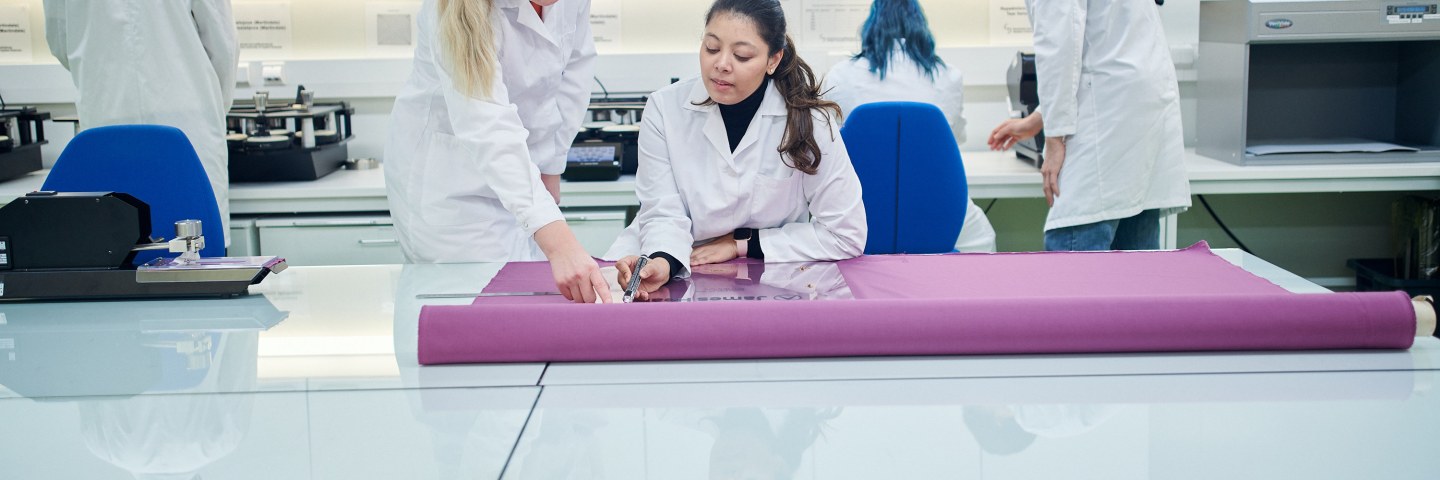
B.Eng. Textile and Material Engineering
- Future career in sustainable textiles
Future career in sustainable textiles
-
-
-
B.Eng. Software Engineering
- Future career in a digitalised world
Future career in a digitalised world
-
-
-
B.Eng. Environmental Engineering and Green Transition
- Expertise in environmental issues
Expertise in environmental issues
-
-
-
B.B.A. International Business
- Towards expertise in international business
Towards expertise in international business
-
-
-

M.B.A. Educational Leadership
- Become a 21st century leader in education
Become a 21st century leader in education
-